


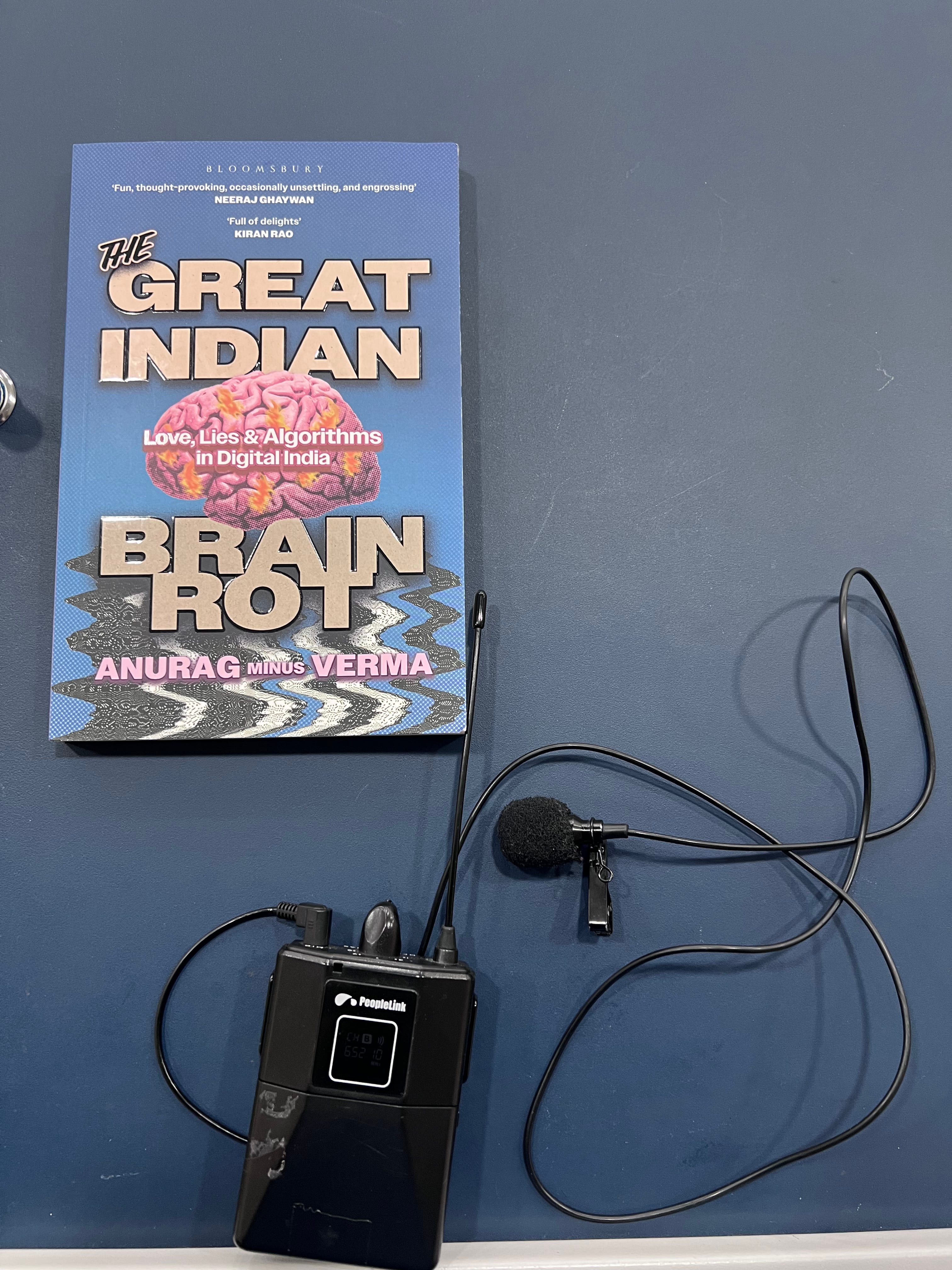
This is an excerpt from my book The Great Indian Brain Rot, which you can buy here.
The evolution of the word ‘cringe’ itself is fascinating. Online, it is often a dismissal of something alien – users and accounts one that fall outside one’s class-coded sense of normalcy. But at its core, cringe is about social awkwardness, about revealing the real self without a mask on. In that sense, to be cringe is almost a philosophical and spiritual exercise – a surrender of ego, an act of self-abandonment. One that ‘kills’ the self and gives birth to a new digital self, which will be scrutinised, remixed, broken into memes, templated and laughed at (and maybe even laughed with). Memes, in this way, are both a form of death and rebirth. A self preserved forever but only as an artifact of humour, stripped of its original meaning. It is the closest thing to permanence in the fleeting art gallery of the internet.
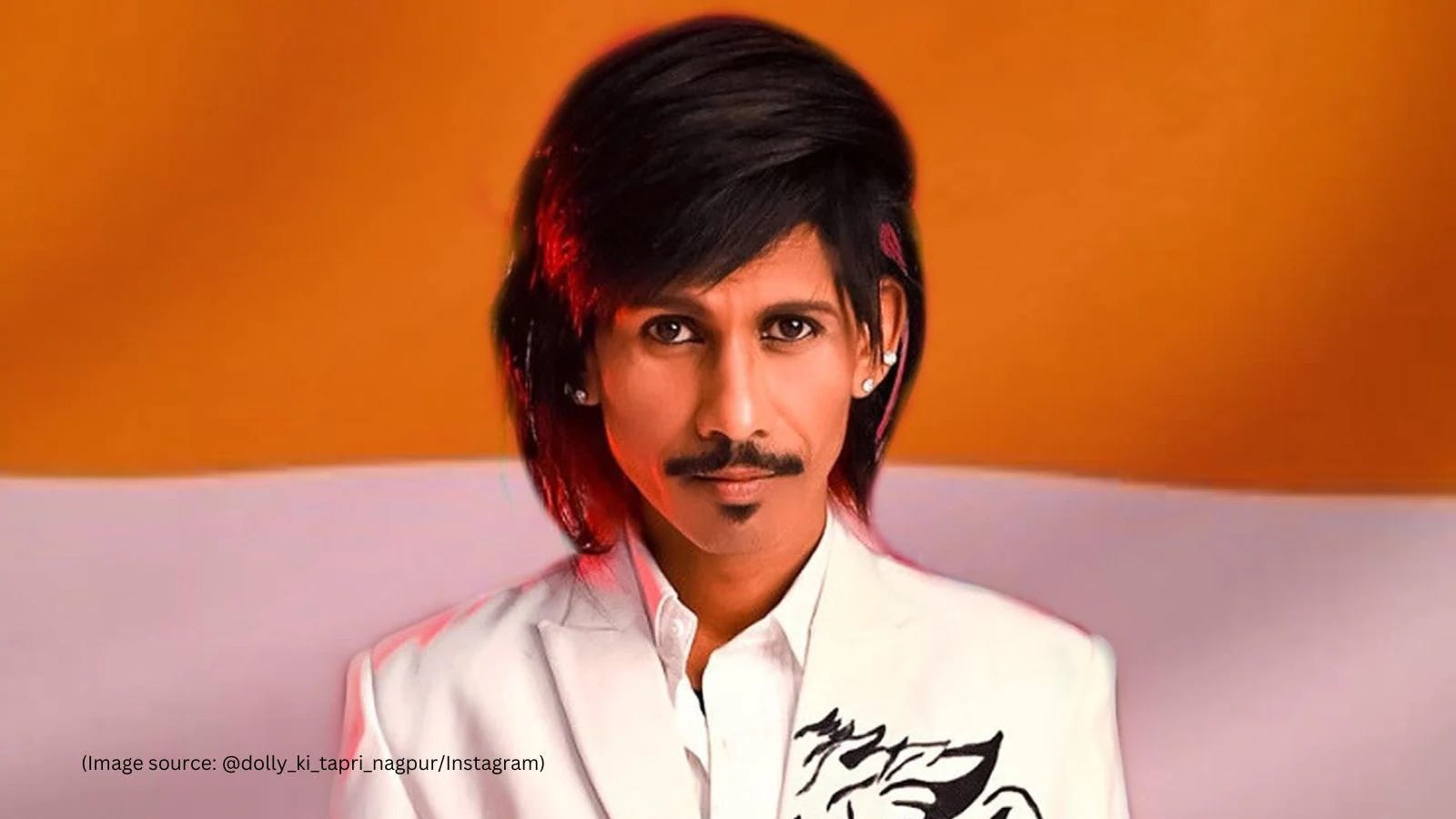
Through this view, breaking social norms without confidence or style produces cringe. This is how the so-called ‘cringe-creators’ gained prominence on the internet. In the early days, Taher Shah, the Pakistani singer behind ‘Eye to Eye’ and ‘Angel’ created cult classics that have been dubbed peak cringe content. His appeal lay in the fact that his songs were meaningless, out of tune, off-rhythm and overloaded with sentimentality bordering on nonsense.
Pooja Jain, popularly known as Dhinchak Pooja, is a prime example of what can be defined as ‘internet cringe’. Her lyrics – meditations on selfies and scooters – are not meant to convey an extraordinary depth of meaning, subtext or fine lyricism. Instead, they embody the courage to show the world that which can be laughed at. She is self-aware and does what she does with a sense of ease.

One of the rules of cringe content is the absence of internal conflict. One who experiences post-upload guilt, self-cringes, second-guesses their instincts can never truly achieve cringedom. To be cringe is to be absolutely free from anxious thoughts, self-doubt, the tyranny of ‘what-ifs’ and, most important, self-judgement. Only with the complete assassination of that critical voice in the head – conditioned to feel shame, self-correct and conform to dignity and decorum – can one enter a true state of cringedom.
Here, there is no need for improvement because true cringe believes we are perfect beings exactly as we are. Such creators see themselves as perfectly imperfect. It’s a radical reclamation of humiliation. To be cringe is to be unburdened, to exist without the weight of social expectations or the baggage of self-awareness. It is a state of pure presence, unfiltered and unrefined. In that sense, cringe is the ultimate nirvana offered by the digital world. In fact, the element of amateurishness is embedded in the very soul of the internet, making it a permanent part of its aesthetics. The internet cannot survive without it. It has always been the refuge of the amateur.

For instance the first viral internet song of youtube india- ‘Why This Kolaveri Di’ appeared in the precise moment India decided that cringe was cool. The lyrics were an exercise in reckless confidence, a mix of Tamil-infused nonsense and phrases like ‘soup boys’ and ‘white skinu girlu’. There was no lyrical brilliance, no haunting melody, just the kind of absurdity that the internet, still in its pre-meme innocence era, was eager to embrace. Unlike Bollywood, which still clung to the illusion that virality could be engineered only through meticulous planning and paid trends, ‘Why This Kolaveri Di’ was an accident that became a phenomenon. The video had no gloss, no effort to appear sophisticated. It looked like a bunch of friends fooling around in a recording studio, and that was precisely its appeal. It was a time when people were growing weary of overproduced music videos and yearned for something raw, something that did not take itself seriously.
Within days, the song leaped out of YouTube and into WhatsApp forwards, auto rickshaw speakers, car stereos and wedding dance floors. Javed Akhtar, a man steeped in the literary legacy of Sahir Ludhianvi and Ghalib, saw the Tanglish song as a sign of cultural decay. He called the tune ‘ordinary’, the singing ‘substandard’ and the lyrics an ‘insult to sensibilities’, struggling to understand how something so juvenile and random became a phenomenon. But that’s the thing about the internet: it doesn’t always care for structured poetry or artistic depth. It can also reward audacity and sometimes, a man repeating ‘Kolaveri Kolaveri Kolaveri Di…’ over a beat is all he needs to rule the charts. Like ‘Sutta Na Mila’, ‘Why This Kolaveri Di’ thrived because amateurism was the aesthetic.
Even before the internet days, Rakhi Sawant was already effortlessly mastering the cringe aesthetic. She was the OG, pioneering a style where she shed all seriousness and turned her entire persona into a self-deprecatory experiment for engagement. Long before influencers figured out that controversy equals views, Rakhi had already cracked the formula. She understood that in an industry obsessed with grace and decorum, being shamelessly loud, ‘extra’ and unpredictable was a performance in itself. In that sense, a free person who is cringe is like detonators in a world where everyone is performing seriousness, rationality and intelligence.
I often think of these lines from the song ‘Jhallah Wallah’:
Mahfil sajjanon ki, gentlemenon ki hai Bewda koi ho jaye toh aaye maza (A gathering of noble men, of gentlemen But the real fun begins when a drunkard joins in)
Buy The Great Indian Brain Rot Here-
Funnily enough, the "having-fun-in-a-studio-while-recording-a-song" music video became the template for at least a decade. Enjoyed this
Loved the book, AMV.